How to Improve Home Security: 10 Practical Tips That Work
Key Takeaways
- Start with a thorough assessment of your property to identify vulnerable entry points, poorly lit areas, and potential hiding spots.
- Strengthen doors, locks, windows, and sliding doors to create reliable physical barriers against unauthorised access.
- Improve outdoor lighting and maintain landscaping to increase visibility around entrances, pathways, garages, and other vulnerable areas.
- Secure garages, sheds, workshops, and other outbuildings where valuable belongings or potentially useful tools may be stored.
- Use security cameras, alarms, smart locks, and sensors strategically to add monitoring and awareness where they are most useful.
- Establish consistent household habits, such as locking doors and windows, securing valuables, and managing spare keys and access codes.
- Review and maintain your security measures regularly so they continue to work effectively as your property and household needs change.
A secure home gives homeowners more than protection from theft. It creates peace of mind, helps protect family members, safeguards valuable belongings, and reduces the chances that small vulnerabilities become serious problems. Fortunately, improving household security does not always require a costly surveillance system or a major renovation. Many effective measures involve strengthening common entry points, improving visibility, maintaining the property, and developing sensible everyday habits.
From upgrading locks and lighting to securing windows and creating a smarter outdoor layout, homeowners can build several layers of protection. The most effective strategy is to identify potential weaknesses, address them systematically, and make security part of regular home care rather than treating it as an occasional concern.
1. Start by Identifying Your Home’s Weak Points
Before buying security equipment or making upgrades, take time to assess how someone could potentially enter your property without permission. A home security assessment does not have to be complicated. Walk around the property during the day and again after dark, paying attention to areas that are hidden, poorly lit, rarely used, or difficult to see from inside the home. Look at the property from the perspective of someone approaching it for the first time. Are there obvious entry points? Are valuables visible through windows? Could someone reach a rear door without being noticed? Identifying these weaknesses first helps you spend money where it can make the greatest difference.
Begin with the perimeter and work inward. Check fences, gates, garages, sheds, windows, external doors, and other structures. Then consider the interior, particularly rooms that contain electronics, documents, jewellery, tools, or other valuable possessions.
During your assessment, look for:
- Unsecured entry points: Check whether every exterior door, window, garage, and secondary entrance can be properly locked.
- Poor visibility: Identify dark corners, tall vegetation, narrow side passages, and other places where someone could remain concealed.
- Easy access: Look for ladders, bins, outdoor furniture, trees, or other objects that could make access to upper windows easier.
- Visible valuables: Consider whether expensive electronics or other belongings can easily be seen from the street.
- Weak gates and fencing: Examine whether gates close securely and whether damaged fencing creates convenient access to the property.
- Unused entrances: Pay particular attention to doors that are rarely used because they may receive less maintenance and attention.
It can also help to create a simple security map of the property. Mark doors, windows, garages, gates, lighting, cameras, and areas with limited visibility. This gives you a practical overview of where additional protection may be needed.
2. How Secure Are Your Doors and Locks?
Exterior doors are among the most important parts of a home security strategy because they provide direct access to the interior. A strong door can still become a vulnerability if its lock, hinges, frame, or surrounding hardware is weak. Homeowners should therefore evaluate the entire entry system rather than focusing on the lock alone. Check whether doors close firmly, whether frames are damaged, and whether locks engage completely. If a door moves excessively when locked or the frame shows signs of deterioration, improving the locking mechanism alone may not solve the problem.
Consider upgrading older or inadequate locks with high-quality options appropriate for the door and property. Deadbolts can provide additional resistance compared with basic latch mechanisms, while properly installed smart locks can offer useful features such as temporary access codes and activity records. However, technology should complement sound physical security rather than replace it.
Pay attention to the door frame as well. A strong lock is less useful if the surrounding frame is damaged or poorly secured. Quality installation matters because even good hardware can perform poorly when fitted incorrectly.
Homeowners should also:
- Keep exterior doors locked whenever they are not actively being used.
- Avoid leaving spare keys in obvious locations such as under mats or inside decorative objects.
- Review who has copies of household keys, particularly after moving into a new property.
- Consider changing or rekeying locks when appropriate after losing keys or changing occupancy.
- Keep door hinges and hardware in good working order.
- Check garage-to-home doors with the same care given to the main entrance.
- Avoid leaving keys in vehicles parked outside or in unsecured garages.
If you use a smart lock, protect the associated account with a strong, unique password and available security features such as multi-factor authentication. Technology can add convenience, but basic security practices remain essential.
3. Are Your Windows and Sliding Doors Properly Protected?
Windows are often overlooked when homeowners think about security. They can be particularly vulnerable when located at the rear or sides of a property, where they may be less visible from neighbouring homes or public areas. Sliding doors can also require additional attention because their design may present different security considerations from conventional hinged doors. Improving these access points can significantly strengthen the overall security of a property without requiring extensive construction.
Start by checking that every accessible window closes completely and has a functioning lock. Older locks may be damaged, loose, or less effective than modern alternatives. Where appropriate, homeowners can consider supplementary security hardware or professionally installed security products designed for particular window types.
Sliding doors deserve a separate inspection. Make sure the primary locking mechanism works properly and that the door cannot move excessively when closed. Depending on the door system, additional hardware may provide another layer of protection.
Visibility also matters. Windows should not be treated solely as physical barriers. They are opportunities for homeowners to observe what is happening outside. Avoid blocking important sightlines with dense vegetation, large decorative objects, or poorly positioned structures.
For additional protection, consider:
- Checking all window locks periodically.
- Repairing damaged frames, glass, or hardware promptly.
- Using appropriate window coverings when privacy is needed.
- Keeping ground-floor windows free from unnecessary obstructions.
- Reviewing the security of basement or lower-level windows where applicable.
- Ensuring sliding doors are fully closed and secured whenever the home is unattended.
- Considering professionally installed security glazing or other appropriate upgrades for particularly vulnerable openings.
Do not assume that an upstairs window is automatically secure. If a window can be reached from a roof, balcony, tree, neighbouring structure, or other accessible area, it should be included in the security assessment.
4. Could Better Outdoor Lighting Make Your Property Safer?

Outdoor lighting can play an important role in making a property less attractive to unwanted visitors. Darkness provides concealment, while good lighting can make movement around entrances and pathways more noticeable. Effective lighting does not mean illuminating every part of a property continuously. Instead, homeowners should focus on strategic areas where visibility matters most, including entrances, side paths, driveways, garages, gates, and other access points.
Motion-activated lighting can be particularly useful because sudden illumination may draw attention to movement around the property. It can also alert occupants that someone or something has entered a monitored area. In other locations, low-level dusk-to-dawn lighting can provide consistent visibility without requiring homeowners to remember to switch lights on and off.
When planning outdoor lighting, think about both security and usability. Lights that are too bright can create glare and actually make it harder to see what is beyond the illuminated area. Poorly positioned fixtures can also create shadows rather than eliminating them.
A sensible lighting plan may include:
- Front entrance lighting: Make the main doorway, lock, and surrounding area clearly visible.
- Side access lighting: Illuminate narrow pathways where visibility may otherwise be limited.
- Garage lighting: Improve visibility around garage doors and pedestrian access points.
- Driveway lighting: Help residents identify activity around vehicles and property boundaries.
- Rear entry lighting: Pay attention to back doors, patios, and other less visible entrances.
- Motion sensors: Use activation where sudden changes in lighting can provide useful awareness.
Keep fixtures clean and replace failed bulbs promptly. Lighting is only effective when it works reliably. Regularly trim vegetation that blocks fixtures or creates unnecessary shadows.
5. What Role Does Landscaping Play in Home Security?
Landscaping can improve the appearance, privacy, and usability of a property, but it can also affect security. Dense shrubs beside windows, tall vegetation around entrances, and overgrown trees near structures may create hidden areas where unwanted visitors can remain out of sight. Thoughtful landscaping can instead improve visibility while still creating an attractive outdoor environment.
The goal is not to remove all plants or turn a garden into a completely open space. Rather, homeowners should balance privacy with visibility. Low-growing plants near windows can provide visual interest without creating substantial hiding places, while trees can be positioned so that they do not block important sightlines or provide easy access to upper levels.
A well-maintained exterior can also make a property appear occupied and cared for. Broken fencing, neglected gardens, damaged gates, and accumulated debris may signal that certain areas receive little attention.
As part of a proactive approach to home maintenance, regularly inspect the areas surrounding doors, windows, fences, and pathways for changes that could affect security.
Consider these landscaping measures:
- Keep shrubs and vegetation around entry points appropriately trimmed.
- Maintain clear sightlines toward doors, windows, gates, and driveways.
- Prune branches that could provide access to upper-level areas.
- Keep pathways clear and adequately illuminated.
- Repair damaged fencing and gates rather than allowing problems to grow.
- Avoid placing large objects near windows that could obstruct visibility.
- Keep tools, ladders, and other potentially useful climbing aids secured when not in use.
Landscaping should work with your security system rather than against it. A camera hidden behind overgrown vegetation, for example, may have a limited field of view. Regular outdoor maintenance helps preserve the effectiveness of other security measures.
6. Should You Install Security Cameras?
Security cameras have become increasingly accessible, giving homeowners more options for monitoring their properties. A camera system can provide awareness of activity around entrances, driveways, garages, and other important areas. Depending on the equipment and setup, homeowners may also be able to receive alerts or view footage remotely. However, cameras should be considered one component of a broader security strategy rather than a complete solution.
The first step is determining what you actually need to monitor. Installing cameras randomly can create unnecessary expense while leaving important areas uncovered. Walk around the property and identify locations where visual monitoring would be useful. Common choices include the front entrance, driveway, garage, rear entrance, and other accessible areas.
Camera placement is particularly important. The field of view should cover relevant activity while respecting the privacy of neighbours and other people. Homeowners should also understand local laws and applicable privacy requirements before installing or recording surveillance equipment.
When selecting a system, consider:
- Image quality: Clear footage is more useful than a camera that produces difficult-to-identify images.
- Night performance: Check how effectively the camera works in low-light conditions.
- Power source: Decide whether wired, battery-powered, or other configurations suit the property.
- Storage: Understand how recordings are stored and how long they remain available.
- Notifications: Consider whether movement alerts are useful for your household.
- Connectivity: Make sure the system can reliably communicate with your network if it depends on internet access.
- Account security: Protect cameras and associated accounts with strong passwords and available security controls.
Regularly check that cameras remain operational. Clean lenses, inspect power supplies, update software where necessary, and confirm that important areas remain within the intended field of view.
7. How Can Smart Home Technology Strengthen Security?
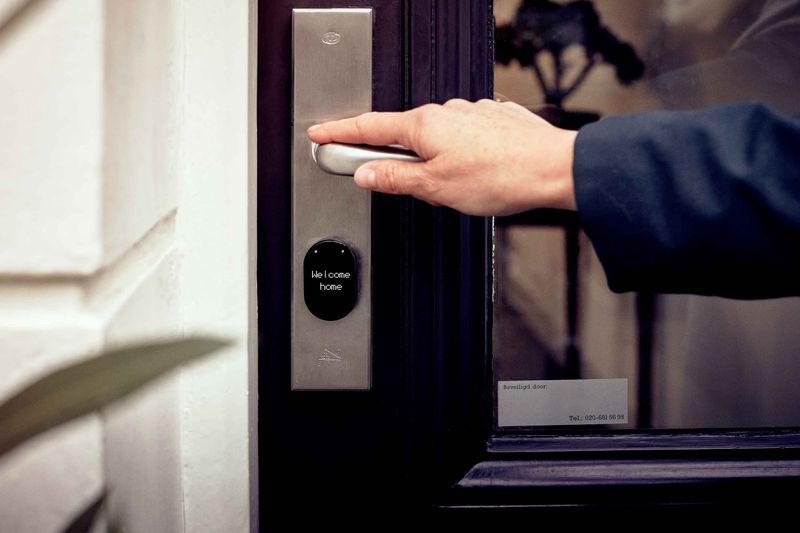
Smart home technology can add another layer of awareness and control. Connected lights, doorbells, locks, sensors, cameras, and alarm systems can allow homeowners to monitor or manage aspects of their property remotely. Some systems can send notifications when a door opens, movement is detected, or another predefined event occurs.
The greatest advantage of smart technology is often its ability to connect different security measures. For example, a motion sensor may trigger lighting while a camera records activity. A smart doorbell may allow an occupant to see who is at the entrance without opening the door. These features can make it easier to identify unusual activity and respond appropriately.
However, connected devices introduce digital security considerations. A poorly protected smart device can create a different type of vulnerability. Homeowners should therefore treat cybersecurity as part of their overall household security strategy.
When setting up smart security devices:
- Use strong, unique passwords for accounts and devices.
- Enable multi-factor authentication where available.
- Keep device software and firmware updated.
- Secure the home Wi-Fi network with a strong password and current security standards.
- Review connected devices periodically and remove equipment that is no longer used.
- Check privacy settings and understand what information devices collect.
- Avoid sharing access credentials unnecessarily.
Smart technology is most useful when it solves a specific security need. Instead of buying every available device, identify the property’s vulnerabilities first and select technology that addresses them.
8. Don’t Forget the Garage, Shed, and Other Outbuildings
Home security should extend beyond the main building. Garages, sheds, workshops, detached structures, and other outbuildings can contain expensive tools, equipment, bicycles, garden machinery, chemicals, or other valuable possessions. They can also provide indirect access to the home if they contain ladders, tools, or other objects that could be misused.
Start by checking that each structure has a reliable lock and that doors and windows close securely. Avoid treating a detached shed as a low-priority area simply because it does not connect directly to the living space. A poorly secured outbuilding can still become an attractive target.
The garage deserves particular attention because it may contain both valuable possessions and a vehicle. If the garage connects directly to the house, the internal door should be treated as an exterior-level security point.
Keep these areas organised and secure by:
- Locking garages and sheds whenever they are not in use.
- Storing ladders and tools securely rather than leaving them outside.
- Keeping vehicle keys and garage access devices protected.
- Checking windows and secondary doors for proper locks.
- Maintaining garage door mechanisms so they close completely.
- Avoiding unnecessary visibility of valuable equipment through windows.
- Reviewing who has remote access to connected garage systems.
Also consider what happens if a garage remote or access key is lost. Some systems allow access credentials to be removed or changed. Understanding these controls before an incident occurs can make it easier to respond quickly.
9. What Everyday Habits Can Prevent Security Problems?
Even the most sophisticated security system can be undermined by simple habits. An unlocked door, open window, visible spare key, or unattended package can create an avoidable vulnerability. Developing consistent household routines is therefore one of the most affordable ways to improve security. Everyone living in the property should understand the basic expectations, particularly children, teenagers, housemates, and regular visitors.
Start by creating a simple routine for leaving and returning home. Before leaving, check exterior doors, accessible windows, garage doors, and other important access points. At night, make sure doors and windows are secured according to your household’s normal routine.
Be cautious about information that could reveal when the property is empty. Publicly sharing detailed holiday plans or real-time location updates can potentially make it easier for others to determine that a home is unoccupied.
Useful habits include:
- Lock doors and windows even when leaving the property for a short period.
- Avoid leaving keys in obvious outdoor locations.
- Keep valuables away from easily visible windows where practical.
- Collect mail and packages promptly.
- Ask trusted people to monitor the property during longer absences.
- Avoid advertising extended periods when the home will be empty.
- Keep gates, garages, and sheds secured.
- Teach household members how to operate alarms and other security equipment.
- Review access codes and digital permissions when household circumstances change.
It is also useful to establish a routine for checking the property before going to bed. Consistency matters more than complexity. A simple checklist that becomes automatic can prevent many common oversights.
10. How Can You Build a Complete Home Security Plan?
The strongest home security strategy combines multiple layers rather than relying on one product or behaviour. Physical barriers can slow unauthorised access, lighting can improve visibility, cameras can provide monitoring, alarms can create alerts, and sensible household habits can reduce opportunities in the first place. When these measures work together, a weakness in one layer does not necessarily compromise the entire property.
Start with the most important vulnerabilities identified during your initial assessment. There is no need to complete every upgrade simultaneously. Prioritise improvements based on the property’s layout, accessibility, existing equipment, household needs, and budget.
A practical security improvement plan could follow this sequence:
- Inspect the property: Identify vulnerable doors, windows, gates, garages, and poorly visible areas.
- Secure physical entry points: Repair damaged doors, frames, windows, locks, and gates.
- Improve outdoor visibility: Install or reposition lighting where it can provide useful coverage.
- Address landscaping: Trim vegetation and remove unnecessary hiding places around vulnerable areas.
- Protect outbuildings: Secure garages, sheds, workshops, and storage areas.
- Add monitoring: Consider cameras, doorbells, alarms, or sensors where they address identified needs.
- Strengthen digital security: Protect smart devices, Wi-Fi networks, and associated accounts.
- Establish household routines: Make locking, checking, and monitoring part of everyday life.
- Review the system: Reassess the property periodically as its layout, technology, and household circumstances change.
- Maintain everything: Repair damaged equipment and replace failed components before they become serious weaknesses.
A security plan should evolve with the property. New landscaping, renovations, changes in household members, new technology, or nearby construction can all alter visibility and access. Reassessing the home periodically helps ensure that security measures continue to address actual risks.
What Should You Prioritise If Your Budget Is Limited?
Improving security does not necessarily require a large investment. Homeowners working with a limited budget should first address basic vulnerabilities before purchasing advanced technology. A high-end camera system cannot compensate for an exterior door that does not lock properly, for example.
Start with the fundamentals:
- Repair damaged doors and window locks.
- Secure gates and outbuildings.
- Improve lighting around key entry points.
- Trim vegetation that creates concealed areas.
- Stop leaving tools, ladders, or other useful equipment unsecured outdoors.
- Establish consistent locking routines.
- Upgrade particularly vulnerable entry points when financially practical.
Once these basics are covered, homeowners can gradually introduce cameras, smart locks, sensors, alarms, or other technology. This approach allows security improvements to be made over time rather than turning them into a single expensive project.
When Should You Review Your Home Security?
Security should not be treated as a one-time upgrade. Properties change over time, and equipment can deteriorate. A fence may become damaged, landscaping can grow into a previously clear sightline, locks can wear out, and cameras can become obstructed. Changes in household routines can also create new access or security considerations.
A useful approach is to perform a more detailed review at least once or twice a year, with additional checks after major changes to the property. Seasonal inspections can also identify problems caused by weather, vegetation growth, or outdoor wear.
Pay particular attention after:
- Moving into a new property.
- Completing a renovation or addition.
- Installing new gates, fences, windows, or doors.
- Changing household members or access arrangements.
- Adding smart security devices.
- Experiencing a lost key or access credential.
- Noticing repeated equipment failures.
- Returning from a long period away from home.
Regular reviews help ensure that security measures remain practical and functional instead of becoming outdated features that provide a false sense of protection.
A Safer Home Starts With Consistent Action
Learning how to improve home security is less about finding one perfect product and more about building several sensible layers of protection. Strong doors and locks, secure windows, effective lighting, well-maintained landscaping, protected outbuildings, smart technology, cameras, and good household habits can all contribute to a safer property. The right combination will depend on the home’s design, location, occupants, and budget.
The most important step is to begin with a realistic assessment. Identify where your property is most vulnerable, address the basics, and then add additional measures where they provide meaningful value. Security also needs ongoing attention because equipment, landscaping, technology, and household routines can change over time.
By making security part of regular home care, homeowners can reduce avoidable vulnerabilities while creating a property that is more resilient, visible, and easier to monitor. Small improvements made consistently can ultimately make a substantial difference in protecting the people and possessions that matter most.